What Is the Maximum Temperature for Welding Gloves?
Welding gloves protect hands from sparks, spatter, radiant heat, hot metal, and abrasion. But one question often causes confusion: What is the maximum temperature for welding gloves?
There is no single temperature that applies to every welding glove. Heat protection depends on the glove material, thickness, construction, test standard, type of heat exposure, and how long the glove contacts the heat source.
A glove that protects against brief welding sparks may not safely protect against prolonged contact with hot steel. For this reason, buyers should use the manufacturer’s stated performance data and select gloves for the specific welding process.
Why Welding Gloves Do Not Have One Maximum Temperature
Temperature alone does not define the risk. A glove’s protection depends on several conditions:
- Contact time with a hot object
- Heat source, such as flame, radiant heat, sparks, or molten metal
- Type and thickness of leather or fabric
- Glove lining and insulation
- Moisture, wear, contamination, and damage
- Hand pressure against the hot surface
- Welding process and work environment
For example, briefly handling a warm workpiece is very different from holding a heated metal part under pressure. Even a heat-resistant glove can transfer heat to the hand when contact lasts too long.
How Heat Resistance Is Tested
Heat-protective gloves may be tested for different thermal hazards, including contact heat, convective heat, radiant heat, flame resistance, and molten-metal splash.
Standards such as EN 407 assess thermal-risk performance across multiple categories. However, these test ratings should not be treated as a simple promise that a glove is safe at one fixed temperature for unlimited time. The standard itself distinguishes between different heat hazards and performance measures. EN 407:2020 overview
Welding gloves may also be evaluated under welding-specific standards, such as EN 12477, which focuses on glove requirements for welding and allied processes. Always check the product label, technical data sheet, and applicable local safety rules.
Typical Welding Glove Materials
Cowhide Split Leather
Cowhide split leather is widely used in MIG and stick welding gloves because it offers durable protection against sparks, spatter, and abrasion. It is commonly chosen for general fabrication and heavier welding tasks.
Goatskin or Deerskin Leather
Goatskin and deerskin gloves are often selected for TIG welding because they provide better feel and dexterity. They may offer less bulk than heavy MIG gloves, making them useful for precise torch control.
Aluminized and Specialty Heat Materials
For high-radiant-heat applications, specialty gloves may use aluminized layers, insulated linings, or engineered heat-resistant materials. These gloves should be selected based on documented performance, not appearance alone.
What Temperature Can Welding Gloves Handle?
The safe answer is: only the temperature and exposure time stated by the manufacturer for that specific glove.
Some heat-resistant industrial gloves are marketed with contact-heat ratings at specific temperatures for limited test durations. Welding gloves, however, are usually designed around protection from sparks, spatter, arc heat, and intermittent contact rather than repeated handling of extremely hot parts.
Never assume that a glove protects against the temperature of the welding arc itself. Welding arcs are far hotter than glove materials can withstand through direct exposure. Welding gloves protect the hands from surrounding thermal hazards, not from direct contact with the arc.
Choosing Winter Welding Gloves
Winter welding gloves are designed to support welding work in cold environments. They may include fleece, cotton, thermal, or insulated linings that help maintain warmth and comfort.
However, extra insulation does not automatically mean a higher heat-resistance rating. In fact, thicker winter gloves may reduce finger control and make fine TIG work more difficult. The correct choice depends on whether the main hazard is cold exposure, welding spatter, contact heat, or a combination of these conditions.
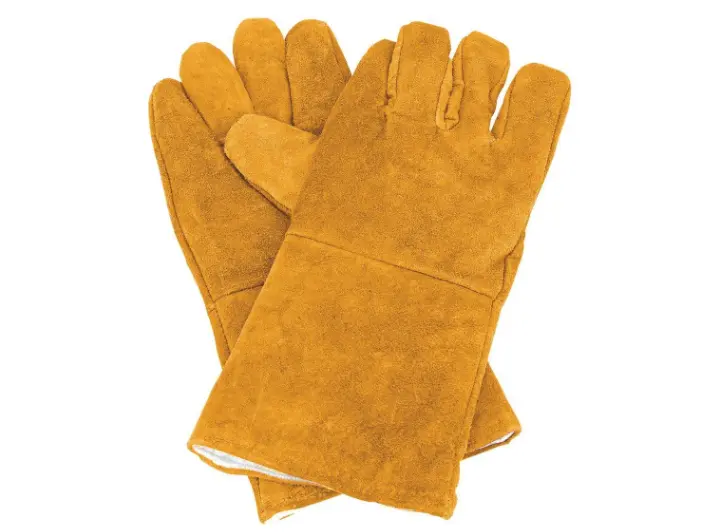
When choosing winter welding gloves, look for:
- A suitable welding-process rating
- Leather type and palm reinforcement
- Extended cuff protection
- Insulation appropriate for the working temperature
- Adequate dexterity for the job
- Clear manufacturer heat-performance information
- Dry, undamaged material and sound stitching
Signs That Welding Gloves Should Be Replaced
Replace welding gloves when they show holes, burns through the leather, cracked material, loose seams, stiff or contaminated surfaces, damaged lining, or reduced fit. Damaged gloves can allow heat, sparks, or molten metal to reach the skin much more quickly.
Gloves that become wet with water, oil, solvents, or other contaminants should be assessed before reuse. Moisture and contamination can affect both comfort and protective performance.
Safe Use Tips
Use welding gloves as one part of a complete personal protective equipment program. Wear appropriate welding clothing, helmet protection, footwear, and arm protection for the task.
Avoid grabbing hot workpieces without confirming their temperature. Use tongs, pliers, clamps, or heat-resistant handling tools whenever possible. Follow the employer’s hazard assessment, welding procedure, and local safety requirements.
Conclusion
There is no universal maximum temperature for welding gloves. The safe limit depends on the glove’s design, material, thermal rating, and the type and duration of heat exposure.
For reliable protection, choose gloves made for the welding process, review the manufacturer’s technical data, replace damaged gloves promptly, and use tools rather than hands for hot materials. Winter welding gloves can improve comfort in cold conditions, but they should still be selected for the actual welding and heat hazards present.