Ultimate Guide to Leather Welding Gloves for MIG & TIG: Finding the Right Resistant Leather for Every Welder
Choosing the correct type of leather can change your whole workday. This guide explores how a quality welding glove handles extreme heat and sharp metal edges. We explain why the perfect glove for a welder depends heavily on the process, whether that is MIG or TIG. From flexible hides to thick, resistant leather, learning how to select the right leather welding gloves will keep you safe. Picking the right leather welding gloves for mig or tig saves you money and reduces injuries on the job site.
Why Are Leather Welding Gloves Crucial for Welding Safety?
Safety is always step one in any fabrication shop. A high-quality welding glove acts as your main shield against serious danger. The intense heat created by an arc can cause severe burns in just seconds. Because of this, proper protective gear is not just optional; it is vital. Every metalworker knows that sparks and spatter fly everywhere during a long shift. A good glove will block those hazards easily on every weld.
Welding gloves provide a tough barrier for your skin. They stop hot metal from reaching your hands and forearms. Without this solid hand protection, a simple weld could end in an emergency hospital trip. To truly protect your hands, you need materials that do not melt. Synthetic fabrics often melt right into the skin when hit by a spark. This is why leather remains the absolute industry standard for hand safety.
Good welding safety starts with smart choices. A solid glove gives you peace of mind. When you weld, your focus should stay entirely on the puddle, not on the fear of getting burned. This peace of mind allows you to create a cleaner, stronger weld every single time. It keeps the workflow smooth and accident-free.
How Does Cowhide Leather Compare for Heavy-Duty Weld Tasks?
When you face high-heat jobs, cowhide leather is a champion. Cowhide is incredibly tough, dense, and thick. This makes it the top choice for stick welding. Stick welding creates a lot of spatter. It also produces massive amounts of heat. You need a heavy-duty glove to handle this mess safely.
A strong cowhide glove offers amazing durability. These leather gloves take a serious beating on the rough shop floor. They resist ripping and tearing when you carry sharp steel plates. Many bulk buyers choose cowhide because it lasts longer. A durable glove saves money because you do not have to replace it every single week.
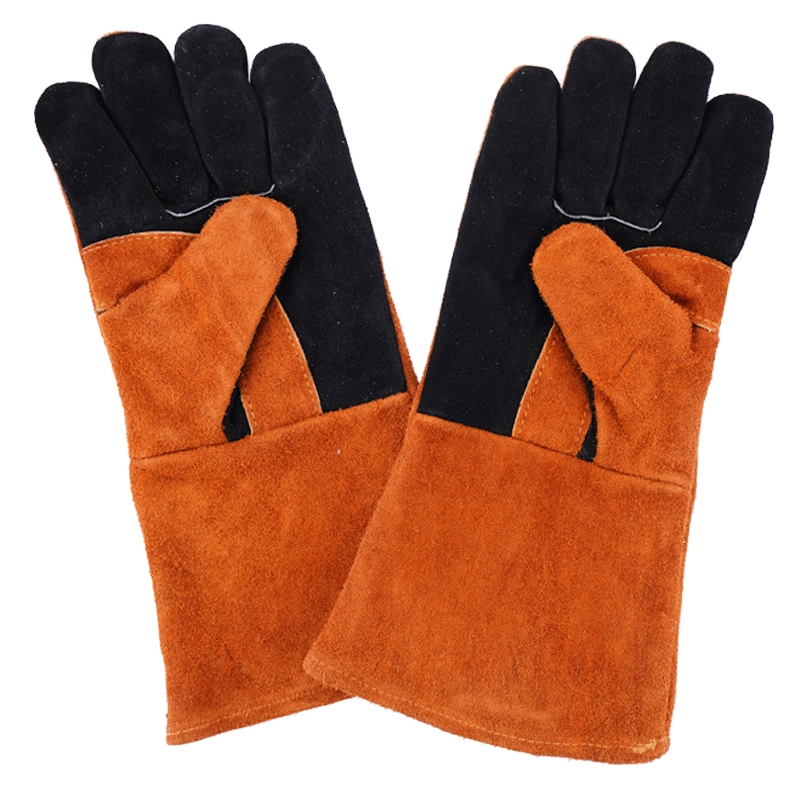
For big industrial welding jobs, cowhide is simply reliable. Some styles, like the 10.5" Suede Leather Yellow Cloth Split Palm Gloves, feature thick split cowhide that blocks radiant heat. This thick material acts as a massive wall between your skin and the bright arc. Your glove takes the heavy abuse so your hands do not have to.
What Makes Goatskin Leather the Best Leather for TIG Welding?
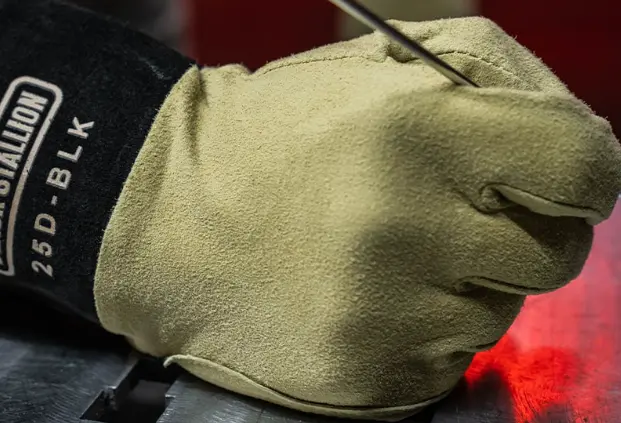
TIG welding requires extreme precision and a steady hand. You have to feed a tiny filler rod with your fingers. You cannot do this wearing a giant, bulky glove. This is exactly where goatskin leather shines. Many professionals consider it the best leather for this specific job. Goatskin is very thin but surprisingly tough.
Because it is so thin, goatskin allows for great dexterity. Good hand movement is critical when you lay down a clean TIG weld. TIG welding gloves must feel almost like a second skin. If your glove is too thick, your weld will look sloppy. Goatskin gives you that perfect, natural feel required for high-end fabrication.
While TIG produces fewer sparks, it still gets extremely hot. A goatskin glove provides enough protection from the arc without sacrificing your control. For precision welding tasks, you cannot beat a well-made TIG glove. It is the ultimate tool for fine detail work and delicate joints.
Why Are Premium Leather Welding Gloves for MIG Built Differently?
MIG welding sits right between Stick and TIG in terms of heat and mess. Therefore, a MIG welding glove needs to balance two very different things. It needs more heat resistance than a TIG glove, but it needs more flexibility than a Stick glove. Premium leather welding gloves use smart designs to achieve this exact balance. MIG welding gloves provide the perfect middle ground for daily shop use.
When you look for the perfect leather welding gloves for mig, you often find a mix of materials. Sometimes the palm is made from a softer hide, while the back is made from thick cowhide. This gives you finger control to pull the trigger, plus a heavy heat shield on the back. A good MIG glove lets you work comfortably for hours. Some welding gloves are made from mixed hides to offer the best of both worlds.
Many distributors want alternatives to pricey brands like Tillman to boost profits. A high-quality OEM glove can match that premium feel easily. When a glove is built properly for MIG, the welder feels the difference immediately. It makes the daily grind much smoother and keeps productivity high.
How Do Heat Resistant Materials Handle Molten Metal and Sparks?
The heat generated during welding is intense. A heat resistant glove must stop contact heat from burning your skin. When you rest your hand on a hot piece of steel, the glove absorbs that energy. Leather naturally resists burning. It will not catch fire easily like regular cotton cloth.
These resistant gloves deal with extreme temperatures daily. When molten metal drops onto a heat-resistant glove, it usually bounces right off. The leather chars slightly but stays totally intact. This superior heat resistance is why we rely on animal hides. They handle heat and sparks better than almost anything else on the planet.
To boost safety even more, many gloves use special thermal linings. A fleece or foam lining adds extra heat protection. It creates a pocket of air between the hot leather and your skin. This layered approach ensures that even under extreme heat, your hand stays safe and cool.
What Is the Difference Between Split Cowhide and Top Grain Cowhide?
Understanding the type of leather helps you choose the right glove. An animal hide is naturally thick. Tanneries often split it into two distinct layers. The outer layer is the top grain cowhide. It is smooth, soft, and naturally repels water. Top grain is very strong and offers a great, premium feel.
The inner layer is the split cowhide. It has a rough, suede-like texture. Split leather is highly resistant to heat. It is also much cheaper to produce. This makes it perfect for heavy-duty welding gloves. A side split is taken from the ribs of the cow, which is the most durable part of the hide.
Many excellent gloves combine both types of leather. For example, AB Grade Cowhide Golden Yellow 10.5'' Working Gloves use tough leather to maximize value and safety. Knowing the difference helps buyers match the glove to the exact job requirements. Top grain gives you feeling, while split gives you a tough heat shield.
How Do TIG Welding Gloves Balance Heat Protection and Dexterity?
A welder's job is part art and part science. TIG welding gloves are designed to support that art. They must be flexible and comfortable. If a glove fights against your hand, you will get tired quickly. An ergonomic design helps reduce hand fatigue during a long, twelve-hour shift.
These gloves are made to fit tightly. A snug fit prevents the material from bunching up. When you hold the torch, you need a secure grip. Some TIG gloves use pigskin or deerskin to achieve this. Pigskin is unique because it stays soft even after it gets wet and dries out.
Even though they are thin, these gloves still handle heat well. They protect against the harsh UV rays from the arc. While they cannot stop large blobs of molten metal, they handle the specific hazards of TIG perfectly. They provide just enough armor without getting in the way of your work.
Why Do You Need a Reinforced Palm and Abrasion Resistant Features?
A welding glove does more than just block heat. A welder constantly handles rough, heavy steel. This causes severe wear and tear on the glove over time. A reinforced palm adds an extra layer of leather to the high-wear areas. This simple feature effectively doubles the life of the glove.
Abrasion resistant materials stop the glove from tearing. When you grind metal, the friction destroys cheap fabric instantly. Strong leather fights back against this abrasion. A durable and comfortable glove means you do not have to stop working just to change gear.
Sewing gloves with kevlar thread is another massive upgrade. Regular thread burns and breaks, causing the glove to fall apart. Kevlar thread resists heat and keeps the glove together under extreme stress. A tough 35cm Palm Cowhide Arm Microfiber Leather Welding Gloves will feature these vital reinforcements for maximum lifespan.
Are Cut Resistant Gloves Necessary for a Metalworker?
Yes, absolutely. Cut hazards are everywhere in a metal shop. Sharp edges on freshly cut steel can slice right through a standard glove. Cut resistant gloves use high-tech liners, like Kevlar or HPPE, hidden inside the leather. These resistant welding gloves provide dual protection.
They stop both heat and sharp blades. For a metalworker, this is a huge advantage. You do not have to switch gloves when moving from the welding table to the band saw. These specialized resistant gloves keep your hands safe during every step of the fabrication process.
Safety standards like EN407 measure heat, but cut ratings are just as important. A premium glove will score high in both areas. Combining a tough leather outer shell with a cut-resistant inner liner creates the ultimate safety tool.

How to Find Durable Leather Gloves That Fit Properly?
Fit is everything in hand protection. If a glove is too big, it will slip off and catch on machinery. If it is too small, it will restrict blood flow and make your hands cold. You must find durable leather welding gloves that fit like they were made specifically for you. Always check the sizing chart carefully before buying.
A good glove should be breathable. This stops your hands from sweating too much. Sweaty hands lead to bad smells and a ruined internal liner. For general tasks around the shop, Plush Palms Short Universal 26.5cm Cowhide Leather Gloves act as excellent daily work gloves.
When you select a glove, always think about the specific type of welding you do most. Match the hide to the hazard. Whether you need a thick cowhide shield or a soft goatskin touch, the right glove is out there. Take your time, test a few samples, and invest in high-quality gear.
The Most Important Things to Remember
- Match the Hide to the Job: Always select the type of leather based on the specific type of welding you perform to maximize your safety and comfort.
- Use Cowhide for High Heat: Rely on thick split cowhide for stick welding. It offers incredible durability and blocks intense high heat easily.
- Choose Goatskin for TIG: Pick goatskin leather for fine TIG welding tasks. It gives you the ultimate dexterity and a secure grip on the filler rod.
- MIG Needs Balance: Premium leather welding gloves for mig use a mix of top grain and split leather. This perfectly balances flexibility with spark protection.
- Verify the Thread: Make sure your gloves are sewn with heat-resistant Kevlar thread. This prevents the seams from bursting open under heat.
- Check for Palm Reinforcements: A reinforced palm greatly improves how well the glove handles daily abrasion from carrying rough steel.
- Prioritize a Snug Fit: A proper, snug fit reduces hand fatigue, improves hand movement, and ensures you can work comfortably all day long.