The Ultimate Guide to Heat Resistant Welding Gloves: Why Leather Welding Gloves with Kevlar Stitching and a Reinforced Seam Conquer the Toughest Jobs
When you strike an arc to create a weld, you invite extreme danger into your workspace. Finding the perfect glove to shield your body from these harsh conditions is the most important choice a worker can make. This guide breaks down why proper insulation, tough hide, and smart stitching designs keep you safe on the shop floor. You will discover exactly what to look for before buying your next pair of protective items. We will explore everything from material science to everyday comfort on the job site. Whether you are outfitting an entire factory or just working in your garage, knowing the facts about hand safety will save you money and prevent serious injuries.
1. What Makes a Glove Truly Heat-Resistant for High Heat Jobs?
Understanding thermal dynamics is the first step to staying safe. When you perform any weld, you face two distinct types of danger: contact heat and radiant heat. Contact heat occurs when you physically touch a hot piece of steel. Radiant heat is the intense energy glowing off the arc itself, which can bake your skin from a foot away. Standard work gloves simply melt or catch fire under these conditions. You need dedicated heat resistant gloves designed specifically for the extreme environment of a fabrication shop.
True heat protection relies on specialized materials blocking thermal transfer. Modern insulation technologies trap dead air inside the lining, preventing the outside temperature from reaching your skin. High-end models are rigorously tested in laboratories. In fact, some specialized industrial models are certified to handle ambient temperatures up to 932°f for brief periods. This incredible thermal defense gives a worker the precious seconds needed to drop a dangerously hot object before a severe injury occurs.
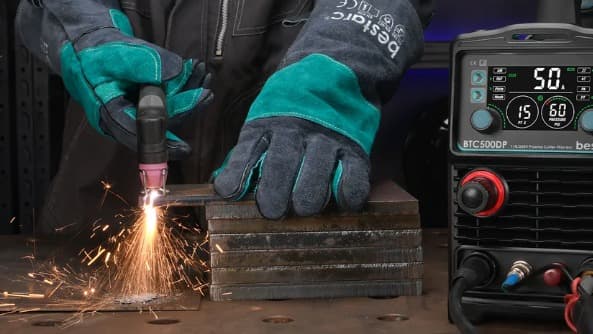
You must also consider the outer shell. If the outer material cannot deflect a flying spark, the inner insulation becomes useless. This is why manufacturers combine highly reflective or extremely dense outer layers with thick, fluffy inner layers. This combination ensures that the extreme heat of the fabrication process stays exactly where it belongs: away from your body.
2. Why Is Cowhide the Best Leather for Daily Work?
Walk into any professional fabrication shop, and you will see a sea of leather. Specifically, cowhide is the undisputed king of the industry. This natural material possesses a unique cellular structure that makes it incredibly dense. Because it is so dense, it naturally blocks wind, resists moisture, and most importantly, deflects sparks. It acts as an organic armor plate for your hands.
Another massive advantage is its sheer toughness. The metal you work with every day is heavy, sharp, and unforgiving. Moving raw steel plates or grinding down sharp edges will destroy synthetic fabrics in a matter of hours. A heavy duty hide, however, shrugs off this abuse. It boasts incredible resistance to any sudden tear, ensuring that a sharp edge does not slice through to your skin during a busy shift.
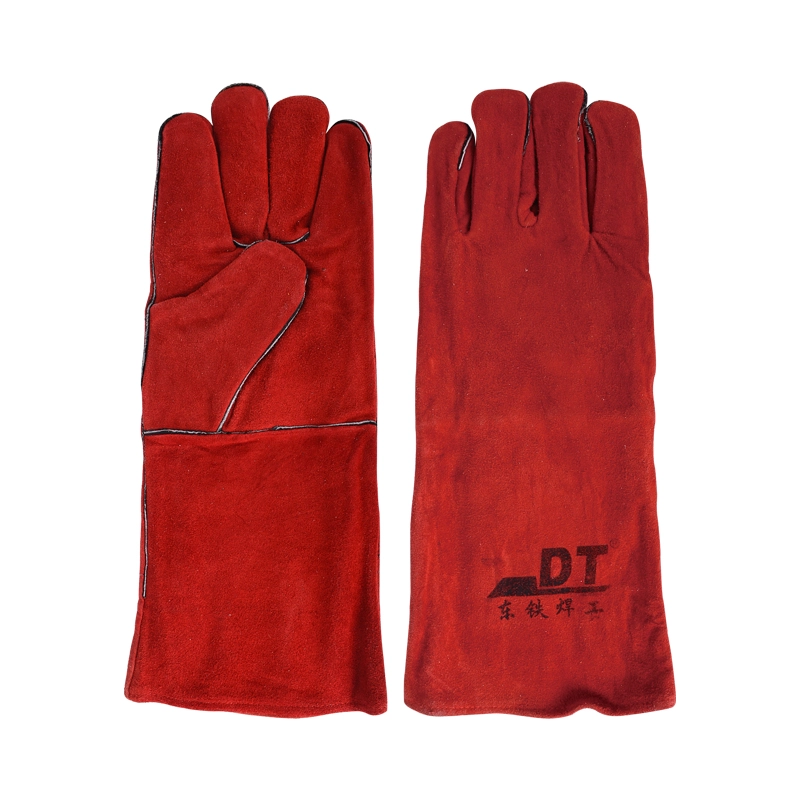
Furthermore, this material breaks in beautifully over time. While it might feel stiff on the first day, it quickly molds to the unique shape of your hand. Check out these premium red color cowhide welding gloves to see how robust material can still look and feel great. A well-worn pair becomes incredibly comfortable, allowing you to maintain a strong, secure grip on your tools without fighting the material itself.
3. How Do Premium Designs Reinforce the Palm and Index Finger?
Ergonomics play a massive role in workplace safety. The human hand is complex, and certain areas take far more abuse than others. When you hold a heavy torch or a grinder, the friction and weight are concentrated in specific zones. A premium design anticipates this wear and tear by adding extra layers of material exactly where you need them most.
The index finger is particularly vulnerable. It is the finger that guides the wire, pulls the trigger, and rests closest to the glowing arc. Manufacturers often reinforce this digit with an extra strip of hide. By doubling the material here, the glove survives much longer under constant friction and radiant energy. The same logic applies to the gripping surface.
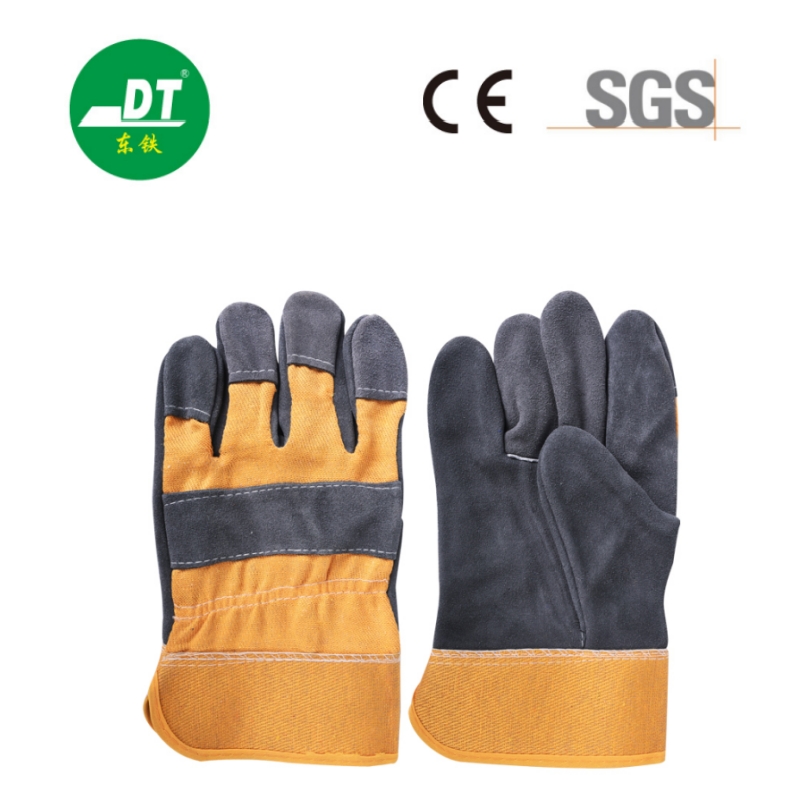
By adding a heavy patch of material across the palm, manufacturers drastically increase the lifespan of the product. This extra padding also helps absorb the harsh vibrations from angle grinders and chipping hammers. Protecting your hands and fingers from repetitive stress injuries is just as important as protecting them from burns. A well-padded gripping surface ensures that you can work a full twelve-hour shift without your muscles cramping or aching.
4. Can a Double-Layer Make Your Gear More Comfortable?
Comfort is not a luxury on a job site; it is a vital safety requirement. If your protective gear is uncomfortable, you are more likely to take it off. This is a fatal mistake. A double-layer design solves this problem by separating the rugged, abrasive outer shell from your sensitive skin.
The inner lining is usually made from soft cotton, fleece, or specialized foam. This inner layer serves two purposes. First, it provides a plush cushion that makes holding heavy tools much easier. Second, it absorbs sweat. Fabrication work is hot, exhausting labor. When your hands sweat, the moisture can actually conduct thermal energy faster. A good lining wicks this moisture away, keeping your hands dry and safe.
Because good welding gloves provide this internal cushioning, workers experience far less fatigue. You don't have to squeeze your tools as hard to maintain control. When your hands are relaxed and comfortable, your welds are smoother, straighter, and more consistent. Comfort directly translates into better craftsmanship and higher productivity on the shop floor.
5. What Are the Best Gloves for MIG vs. TIG Welding?
Not all fabrication processes are identical, and your gear must match the specific job. The MIG process is notoriously messy. It uses a continuously fed wire that generates massive amounts of flying spatter. Drops of molten steel frequently rain down on your hands. Therefore, gloves for mig must be exceptionally tough and thick to block these molten projectiles from burning through.
Conversely, TIG welding is a highly precise, clean process. It requires the operator to feed a tiny rod into the puddle with absolute precision. You cannot perform this delicate task while wearing a bulky, heavy mitt. TIG gloves are typically made from incredibly soft, thin materials like goatskin or kidskin. They prioritize extreme dexterity over massive thermal defense.
Understanding this difference is crucial for your daily welding tasks. If you try to use a thin TIG model for heavy-duty MIG welding, your hands will roast in minutes. If you try to use a heavy MIG model for TIG, your welds will look terrible because you cannot feel the filler rod. Always match the tool to the trade.
- MIG Features: Heavy hide, fleece lining, maximum thermal blocking.
- TIG Features: Thin hide, unlined or lightly lined, maximum finger mobility.
- Stick Features: Extremely heavy hide, highly insulated, built for extreme amperage.
6. Why Does Every Welder Need a Trusted Brand?
In the world of industrial safety, consistency is everything. When you reach for your safety gear, you need absolute confidence that it will perform exactly as expected. This is why establishing a relationship with a reliable brand is a smart business move. A reputable manufacturer employs strict quality control measures to ensure every single product meets high safety standards.
Cheap, unbranded knock-offs flood the market, but they hide dangerous secrets. They might use fake hide, weak cotton thread, or toxic dyes that irritate the skin. When you buy from a trusted source, you know you are getting authentic materials that have been tested in real-world environments.
Consistency also helps with sizing. Once a welder finds a manufacturer whose large size fits perfectly, they can order that exact model for years without worrying about fitment issues. A glove that is too loose will slip, while one that is too tight will restrict blood flow. Trusting a professional manufacturer eliminates this frustrating guesswork.
7. Do Customer Reviews Help You Find the Right Fit?
We live in a connected world, and leveraging the experience of others is a massive advantage. Before purchasing bulk safety supplies, smart sourcing directors always look at customer reviews. These testimonials reveal the true story of how a product performs after months of grueling, dirty work on a real job site.
When analyzing feedback, pay close attention to the overall rating and the specific comments regarding durability. Do reviewers complain that the fingers blow out after a week? Do they praise how the inner lining stays intact? This real-world data is invaluable.
It is also important to consider the source of the review. An industrial pipefitter working 60 hours a week will have very different requirements than a weekend DIY hobbyist building a go-kart in their garage. By reading reviews from people in your specific industry, you can accurately gauge if a product will survive the unique challenges of your daily workflow.
8. Does Extra Length Improve Safety?
Safety does not stop at the wrist. The arteries and tendons in your forearms are highly vulnerable to flying sparks and hot debris. This is why the length of your protective gear is a critical factor. A standard short model might be fine for simple material handling, but it is dangerously inadequate for heavy fabrication.
A long, flared cuff provides a vital shield for your lower arm. It creates an overlapping barrier with your flame-resistant jacket, ensuring that there is no exposed skin. This is especially important when you are working out of position. If you are laying on your back under a chassis or reaching up overhead, gravity will pull sparks straight down your sleeves.
A flared design also allows for quick removal. If a piece of glowing slag somehow manages to fall inside the gauntlet, you need to be able to fling the glove off your hand instantly. A wide opening drastically reduces your exposure time to a dangerous thermal event, potentially saving you from a severe injury.
9. When Should You Use Aluminized Gear for Extreme Heat?
Some industrial environments push the boundaries of human endurance. Foundries, massive shipyards, and heavy structural fabrication shops deal with ambient temperatures that standard hide simply cannot survive. When the radiant energy becomes overwhelming, professionals turn to aluminized technology.
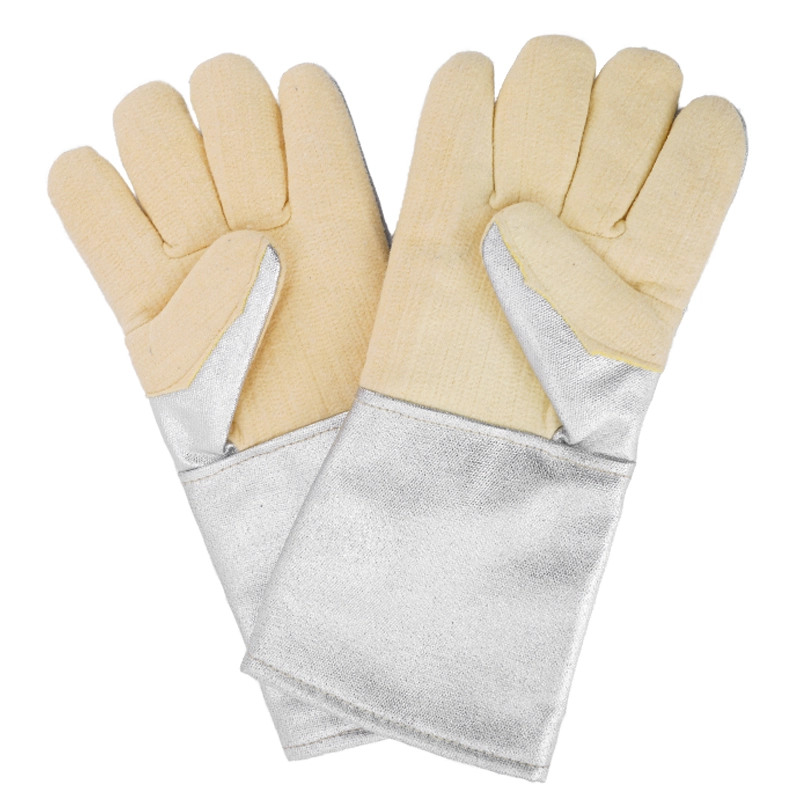
These specialized models feature a reflective metallic coating on the back of the hand. Instead of absorbing the thermal energy, the shiny surface bounces the radiant heat away, much like a mirror reflects light. This allows the operator to withstand massive temperatures without the internal lining catching fire or baking their skin. You can view an example of this advanced technology in these heat resistant fire retardant gloves.
These heavy-duty products are often hybrid designs. They feature a rugged hide on the gripping surface for mechanical strength, and the reflective material on the back to fight radiant energy. This combination represents the pinnacle of industrial hand protection for the most extreme environments on earth.
10. How to Maintain Your Equipment and Prevent a Burn?
Even the most advanced, expensive gear will fail if you abuse it. Proper maintenance is the final, crucial step in your safety protocol. First and foremost, you must keep your gear dry. Moisture is the enemy of thermal insulation. If your gloves get wet from rain, sweat, or a spilled drink, the water will conduct thermal energy straight to your skin, resulting in a painful burn.
Never use your protective items as tongs. A common mistake lazy workers make is picking up a glowing red piece of steel with their hands instead of using pliers. This destroys the hide instantly, ruins the temper of the leather, and compromises the structural integrity of the glove. Always use the proper mechanical tool to move hot steel.
Finally, inspect your items daily before starting a shift. Look for loose threads, small holes, or stiff, cracked leather. If you see damage, throw them away. A damaged glove is a dangerous glove. Take care of your 16 inch thick palm welding protective gloves, and they will take care of you. Ensure your grip is strong, your materials are durable, and your safety is never compromised.
Important Things to Remember
- Understand Your Heat: Differentiate between radiant and contact thermal threats to choose the proper insulation level.
- Trust Natural Hide: Organic materials like cow skin offer the best natural defense against sparks, wind, and sharp edges.
- Look for Reinforcements: Ensure the gripping zones and trigger fingers have extra padding to prevent rapid wear and tear.
- Match the Tool to the Trade: Use heavy, thick padding for messy wire-feed jobs, and thin, soft materials for delicate precision work.
- Demand Strong Thread: Ensure every joint is sewn with fire-proof synthetic thread so the glove doesn't fall apart under pressure.
- Protect Your Forearms: Always use models with flared, elongated gauntlets to prevent slag from rolling down into your sleeves.
- Maintain Your Investment: Keep your items dry, never pick up glowing steel directly, and inspect for holes before every single shift.