The Best Welding Helmet Features: Unlocking Productivity with Ergonomic Design and Modern Tech
As a factory owner specializing in protective gear, I understand that the safety landscape is always changing. For professionals in the industry, finding the best welding helmet is about more than just buying a piece of plastic; it's about investing in your long-term health and efficiency. Today, we are going to dive deep into the features of modern welding helmets, comparing giants like Optrel and 3M Speedglas, and exploring how ergonomic design and advanced lens technology can transform your daily work. Whether you are looking at the 3M Speedglas 9100XXi or exploring what other helmets offer, this guide helps you understand the key features that drive productivity.
Why is this worth reading? Because a welding helmet is the most critical barrier between a welder and the hazards of the job. Choosing the right welding helmet affects everything from the quality of the weld to the physical strain on your neck. In this article, I, Allen, will share insights from the manufacturing floor in China to help distributors and business owners like you select the best welding gear for your teams. We will look at how welding helmets offer safety, comfort, and efficiency in one package.
Why is Ergonomic Design Crucial for the Best Welding Experience?
When we talk about the best welding equipment, ergonomic design is often the unsung hero. Imagine a welder working an eight-hour shift. If their welding helmet is poorly balanced or too heavy, that shift feels twice as long. Ergonomic design in a welding helmet ensures that the unit fits the natural shape of the human head and moves with the user, rather than against them. This focus on human engineering minimizes physical stress and allows the welder to focus entirely on the weld puddle.
The best welding helmet manufacturers understand that a welder is an industrial athlete. Just as a runner needs good shoes, a welder needs an ergonomic helmet. Modern helmets are designed to sit closer to the head to reduce the center of gravity. This might seem like a small detail, but over thousands of welding sessions, it saves the user from chronic pain. When a helmet is ergonomic, it promotes better posture. This leads to cleaner welds because the operator isn't fighting their gear to get a good view of the workpiece.
Furthermore, ergonomic features extend to the external controls. A professional welder shouldn't have to remove their gloves to adjust the lens shade or switch to grind mode. Advanced ergonomic layouts place these controls within easy reach. This seamless interaction between the user and the safety equipment streamlines the entire welding process, proving that comfort and efficiency go hand in hand.
How Does Advanced Headgear Improve Comfort and Stability?
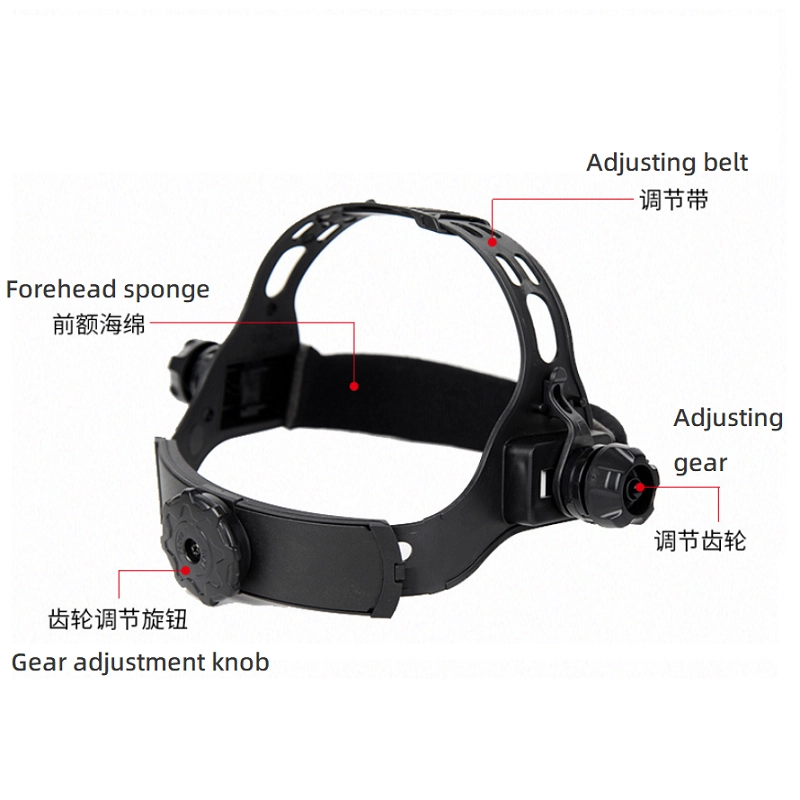
The shell of the helmet protects your face, but the headgear is what connects you to that protection. Welding helmet headgear has evolved significantly from the simple plastic straps of the past. Today, the best welding helmet options feature complex suspension systems designed to distribute weight evenly across the cranium. This prevents the dreaded "pressure points" that can cause headaches and distract a welder from their task.
A key aspect of modern headgear is adjustability. A generic fit simply doesn't work in a professional setting. Headgear needs to be adjustable in multiple directions—not just tightening around the circumference of the head, but also adjusting the depth and the angle at which the helmet sits. This creates a secure fit that stays in place even when the welder is working in awkward positions, such as overhead or tight corners. When the headgear is stable, the lens stays in the optimal viewing position, ensuring consistent visibility.
Innovative headgear often includes a padded headband and a specialized back pad that cradles the back of the head. This design helps to counterbalance the weight of the front shield, reducing the forward pull on the neck. Some advanced helmet designs even allow the pivot point to be adjusted, changing how the helmet feels when it is flipped up. By prioritizing comfort and stability, manufacturers ensure that the welding helmet becomes an extension of the welder, rather than a clumsy attachment.
What Key Features Do Modern Welding Helmets Offer to Boost Productivity?
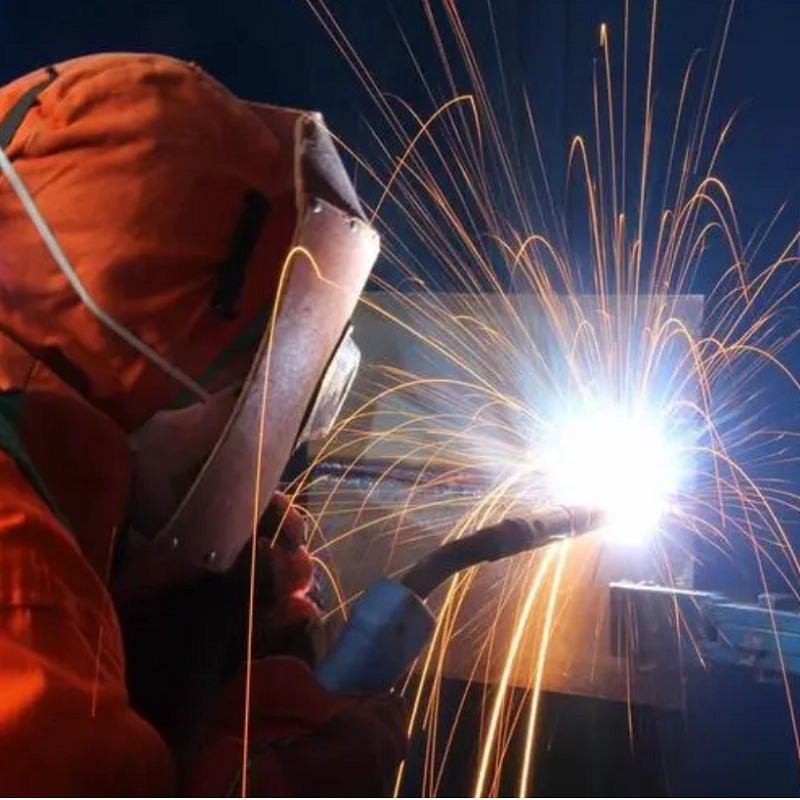
In the competitive world of fabrication, productivity is money. Modern welding helmets are packed with key features designed to shave seconds off every task, which adds up to hours over a week. One of the most significant features is the auto-darkening lens. Unlike passive lenses that require the user to nod their head to lower the shield, an auto-darkening helmet allows the welder to keep the hood down. They can see clearly to position the electrode or torch, and the lens darkens the instant the arc strikes. This precision eliminates the need to constantly flip the helmet up and down, reducing neck fatigue and increasing arc-on time.
Another major productivity booster is the external grind button. Many welding tasks involve both welding and grinding. In the past, a welder had to switch safety equipment or flip up their hood to grind, exposing their eyes to debris. Helmets offer a specific grinding mode that locks the lens in a light state, usually shade 3 or 4. This allows the operator to switch tasks instantly without removing their PPE. This seamless transition keeps the workflow moving and ensures that safety standards are maintained throughout the job.
Additionally, advanced features like memory settings allow users to save their preferred settings for different welding applications. If a welder switches from TIG to stick welding, they can recall the correct sensitivity and delay settings with the push of a button. These features that make work easier are essential for any high-output shop. To see some of the advanced protective gear we manufacture that complements these helmets, check out our variable photoelectric welding protective mask.
3M Speedglas vs. Optrel: What Do These Popular Welding Brands Bring to the Table?
When discussing the best welding helmet brands, names like 3M Speedglas and Optrel frequently dominate the conversation. These welding helmet manufacturers have set the gold standard for quality and innovation. 3M Speedglas is renowned for its reliability and the breadth of its product line. Their helmets offer robust protection and are often favored in heavy industrial environments. They are known for their "SideWindows," which provide peripheral vision, reducing the tunnel vision effect that can make a welder feel isolated.
Optrel, on the other hand, is often celebrated for its optical clarity and color perception. Their lens technology is designed to provide a high-definition view of the weld puddle. Optrel helmets often feature a unique nose cutout in the lens cartridge, which allows the lens to sit closer to the eyes. This increases the field of view without adding weight. Both brands focus heavily on ergonomic design, ensuring that their premium products are comfortable for all-day use.
Choosing between them often comes down to personal preference and specific job requirements. 3M Speedglas might be the choice for a welder who needs a rugged, modular system that can be upgraded with various accessories. Optrel might appeal to the precision TIG welder who values the absolute crispest image of the arc. As a factory owner, I analyze these competitors to ensure the welding helmets offer we provide meet similar standards of excellence, offering distributors like you high-quality alternatives.
Why is the 3M Speedglas 9100XXi Considered a Top Contender?
The 3M Speedglas 9100XXi is frequently cited as one of the best welding helmets on the market, and for good reason. It represents a culmination of ergonomic research and optical science. One of its standout key features is the "Natural Color Technology." Traditional auto-darkening lenses often have a green tint that can wash out colors. The 9100XXi provides a view that appears lighter, brighter, and more realistic. This allows the welder to see the weld pool with greater contrast and control.
Another reason for its popularity is the massive viewing area. The "XXi" designation refers to the extra-large lens size. A larger viewing area means the welder doesn't have to move their head as much to see the entire joint, which directly reduces neck strain. The 3M Speedglas 9100XXi also features an improved user interface with external controls for grinding mode and memory modes, making it incredibly user-friendly.
The headgear on this model is also designed to avoid sensitive areas of the head, providing a secure fit without pressure. While it is a premium product with a higher price tag, the increase in productivity and comfort often justifies the investment for professional shops. For distributors, stocking high-end models like this alongside cost-effective options like our automatic dimming face protection ensures you cater to every level of customer.
How Does Respiratory Protection Integration Combat Harmful Fumes?
Welding safety is not just about protecting your eyes from the light; it's about protecting your lungs from the fume. Harmful welding fumes are a serious occupational hazard. Many modern welding helmets now come ready for, or integrated with, Powered Air Purifying Respirators (PAPR). These systems force filtered air into the helmet, creating a positive pressure environment that keeps fume and particulates out.
Respiratory protection is becoming mandatory in many regions for specific welding processes, especially when working with stainless steel or galvanized materials. A welding helmet with integrated respiratory support typically features a heavy-duty seal around the face and a specialized air duct system to distribute clean air over the welder's face. This not only provides clean air but also creates a cooling effect, which is a massive benefit in hot manufacturing environments.
This integration of respiratory safety into the welding helmet design is a prime example of how helmets provide comprehensive protection. It eliminates the need for a separate tight-fitting respirator mask under the hood, which can be uncomfortable and break the face seal when the jaw moves. Investing in fume protection is investing in the longevity of the welder's career.
Does Lens Technology Really Impact Visibility and Weld Quality?
The short answer is yes. The lens is the heart of the welding helmet. Superior lens technology translates directly to better visibility, and better visibility leads to higher quality welds. Auto-darkening technology has advanced to the point where the switching speed—the time it takes for the lens to go from light to dark—is instantaneous (often 1/25,000th of a second or faster). This protects the eyes from the sudden flash of the welding arc.
Beyond speed, optical clarity is rated on a standard (usually 1/1/1/1). The best welding helmet lenses have a perfect score, meaning there is zero distortion, blurriness, or inconsistent shading across the lens. If a lens is of poor quality, the welder sees a distorted view of the puddle. This can cause them to miss the joint or create an uneven bead.
Furthermore, variable shade ranges allow the lens to be used for a wide range of welding amperages. A lens that can go down to shade 5 for cutting or up to shade 13 for heavy arc welding makes the helmet versatile. Visibility is safety. If you can't see it, you can't weld it safely. To complement good visibility, proper hand protection is also vital; see our single layer leather welding gloves for dexterity and safety.
What Role Do Welding Helmet Manufacturers Play in Safety Innovation?
Welding helmet manufacturers are the drivers of safety culture in our industry. Companies like 3M Speedglas, Optrel, and my own factory are constantly researching new materials and technologies to make helmets lighter, stronger, and smarter. We listen to the feedback from the welder on the ground. If they say a helmet is too hot, we improve the airflow. If they say the headgear slips, we redesign the ratchet system.
Innovation also comes in the form of smart technology. Some welding helmets offer Bluetooth connectivity, allowing users to track arc time and manage settings via a smartphone app. This data can help training facilities and managers optimize productivity. Manufacturers also focus on durability. A welding helmet takes a beating from heat, spark, and spatter. Using high-impact nylon and heat-resistant shields ensures the equipment lasts.
As a manufacturer, I take pride in ensuring that our quality welding helmets meet rigorous international standards. We aim to provide helmets at competitive prices without sacrificing the protection and performance that end-users rely on.
How Can the Right Helmet Reduce Strain on the Neck and Shoulders?
Neck strain is one of the most common complaints among welders. The human head weighs about 10-11 pounds. Adding a heavy welding helmet increases the torque on the neck muscles, especially when the head is tilted forward to view the weld. Over time, this can lead to musculoskeletal disorders.
The best welding helmet mitigates this through weight reduction and balance. Using lightweight composite materials allows helmet designs to be robust yet airy. However, balance is just as important as total weight. A helmet that is front-heavy will constantly pull the head down. Ergonomic headgear that sits low on the back of the head acts as a counterweight, shifting the center of gravity closer to the neck's pivot point.
Additionally, the viewing angle matters. A welding helmet with a large viewing area allows the welder to see the work using their eyes (peripheral vision) rather than having to turn their neck constantly. Reducing the need for repetitive movements significantly lowers the risk of strain. Investing in a lightweight, balanced helmet is investing in the physical health of your workforce.
Choosing the Best Welding Helmet: What Factors Should You Prioritize?
So, how do you choose the best welding helmet for your inventory or your team? Start with the application. If your customers do a lot of TIG work, prioritize sensitivity and low-amperage lens performance. If they do heavy structural work, prioritize heat reflection and respiratory options.
Next, look at visibility. A large viewing area and high-quality auto-darkening lens technology are non-negotiable for professional results. Don't overlook the headgear. Ask yourself: is it adjustable? Does it provide a comfortable fit? An uncomfortable helmet will eventually be taken off, which creates a safety risk.
Finally, consider the brand reputation and support. Whether you choose a famous brand like 3M Speedglas or a high-quality manufacturing partner like us, ensure replacement parts (like cover lenses and sweatbands) are easily available. Remember, the best welding helmet is the one that is worn consistently. It combines safety and comfort to ensure the welder goes home safe every day. For full body protection, consider pairing a great helmet with our welding protective leather clothing.
Key Takeaways for Selecting a Welding Helmet
- Prioritize Ergonomics: An ergonomic design reduces fatigue and neck strain, allowing for longer, more comfortable welding sessions.
- Headgear Matters: Look for fully adjustable headgear that distributes weight evenly and provides a secure fit.
- Lens Quality is Key: High-definition lens technology and a fast auto-darkening response time are crucial for visibility and weld quality.
- Boost Productivity: Features like external grind buttons and memory settings streamline the workflow.
- Consider Fumes: For hazardous environments, ensure the helmet is compatible with respiratory protection systems.
- Check the Brand: Whether it's 3M Speedglas, Optrel, or a trusted manufacturer, ensure the helmet meets safety standards and offers good support.