How to Choose a Welding Helmet That Meets ANSI Safety Standards for Every Welder
I run a factory in China that specializes in making top-notch protective gear, from sturdy gloves to advanced apparel. Over the years, I’ve learned that the most important tool for any welder isn’t just the torch; it’s the welding helmet. If you are looking to choose a welding helmet, you might feel overwhelmed by all the options. Whether you are a distributor like Mark in the USA or a shop owner, finding the best welding helmet is vital for safety and productivity.
In this article, we will explore what makes a welders helmet safe and effective. We will dive deep into why your gear must meet ANSI standards and how the right safety standard can save eyesight and careers. Read on to become an expert on selecting the best welding protection.
Why is the Welding Helmet the Most Critical Safety Equipment for a Welder?
When a welder strikes an arc, they are unleashing a powerful force. The light produced is brighter than the sun, and the heat is intense. This is why the welding helmet is the undisputed king of personal protective equipment in the workshop. It is the first line of defense. Without a proper welding helmet, a welder risks permanent eye damage, skin burns, and blindness.
A standard welding helmet does more than just block bright light. It creates a barrier against flying debris, sparks and molten metal. Imagine holding a firework in your hand; that is what welding can feel like without protection. The helmet protects the face, neck, and ears. In my factory, we emphasize that safety products like helmets are not just accessories; they are necessities. A quality welding helmet allows the welder to focus on the bead and the puddle without fear.
Furthermore, welding safety relies on consistency. If a welder has a heavy or uncomfortable helmet, they might take it off when they shouldn't. A good welding helmet stays on. It becomes an extension of the worker. It ensures that eye protection is continuous. When you provide the right gear, you are not just buying a plastic shell; you are investing in the health and longevity of your workforce.
What Does It Mean to Meet ANSI Safety Standards?
In the world of safety equipment, standards are everything. In the United States, the gold standard is the American National Standards Institute, or ANSI. Specifically, for eye and face protection, the standard is ANSI Z87.1. When you see a label that says a product meets Z87.1, it means the welding helmet has passed rigorous testing.
What does this testing involve? It tests for impact resistance to ensure the helmet won't crack if hit by flying objects. It also tests the lens to ensure it blocks 100% of harmful UV (ultraviolet) and IR (infrared) radiation, regardless of the shade setting. A helmet must meet these strict criteria to be sold as protective gear. If a welding helmet does not meet ANSI Z87.1 standards, it is risky to use.
For buyers, looking for the ANSI mark is the easiest way to ensure quality. It tells you that the helmet manufacturer cares about safety. Whether you are looking at big brands like ESAB or sourcing from a quality factory like mine, that certification is non-negotiable. It proves that the safety standard is high. Never compromise on this. The Occupational Safety and Health Administration (OSHA) requires this standard for a reason. It saves eyes.
Fixed Shade vs. Auto-Darkening: Which Lens Technology Fits Your Needs?
Decades ago, every welder used a fixed shade helmet. These helmets have a dark piece of glass that never changes. To see your work, you have to flip the helmet up. Then, right before you start, you nod your head to flip it down. While fixed shade helmets are cheap and durable, they can cause neck strain and make it hard to keep the torch steady.
Today, the auto-darkening welding helmet is the standard for professionals. These helmets use a Liquid Crystal Display (LCD) and sensors. When the sensors detect the welding arc, the lens automatically darkens in a fraction of a second. When the arc stops, it clears up again. This means the welder can see their setup with the helmet down. It makes welding much faster and more precise.
Auto-darkening technology reduces mistakes. You don't have to guess where your torch is. However, these helmets are more expensive than fixed shade ones. They also require batteries or solar power. But for most modern welding applications, the benefits of an auto-darkening helmet far outweigh the costs. It allows for a seamless workflow.
How Does Optical Clarity Affect the Welder's Vision and Precision?
Have you ever looked through a cheap pair of sunglasses and felt like everything was slightly distorted or blurry? Now imagine trying to weld a perfect joint with that view. This is where optical clarity comes in. The lens quality determines how well the welder can see the weld puddle.
Optical class is rated on a scale of 1 to 3, with 1 being the best. A rating of 1/1/1/1 is the highest score a lens can get. It measures four things: optical quality (blurriness), diffusion of light (haziness), variation in luminous transmittance (consistency of shade), and angle dependence (how the view changes from the side). A welding helmet with a top-rated lens provides a high-definition view.
Better vision leads to better welds. When the viewing area is clear and crisp, the welder can control the heat and speed more accurately. They can see the separation between the slag and the molten metal. High-quality brands like ESAB and our own Variable Photoelectric Welding Protective Mask focus heavily on this optical performance. Good vision reduces eye strain, allowing the welder to work longer without getting a headache.
Why is the Shade Range Important for Different Welding Processes?
Not all welding is the same brightness. TIG welding at low amps is much dimmer than MIG welding at high amps. Therefore, you cannot use the same shade level for everything. A fixed shade helmet usually comes with a #10 lens, which is a middle ground. But for versatility, you need a shade range.
Most auto-darkening helmets offer a variable shade. This means you can adjust the shade based on the brightness of the arc. The shade range usually goes from #9 to #13. Some advanced helmets even go lower for grinding or cutting. This flexibility is crucial. If the lens shade is too dark, you can't see the puddle. If it is too light, your eyes will hurt.
Having a helmet with an adjustable shade allows a welder to switch tasks instantly. They can go from heavy structural steel to thin sheet metal without changing helmets. This versatility is a key feature to look for. It ensures that the eye protection is always optimized for the specific type of welding being done.

Comfort and Fit: Does the Headgear Really Make a Difference?
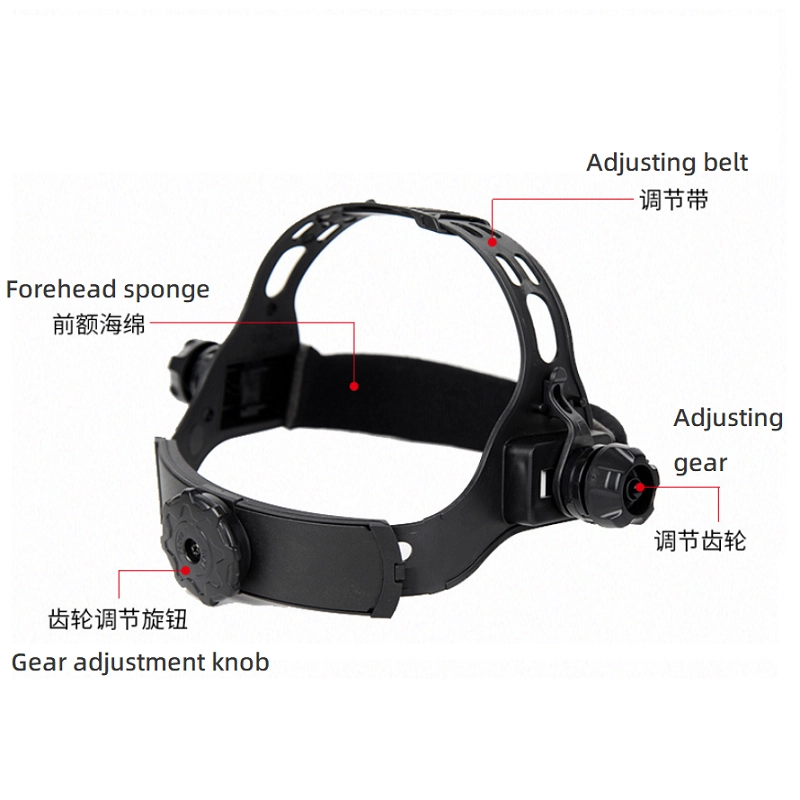
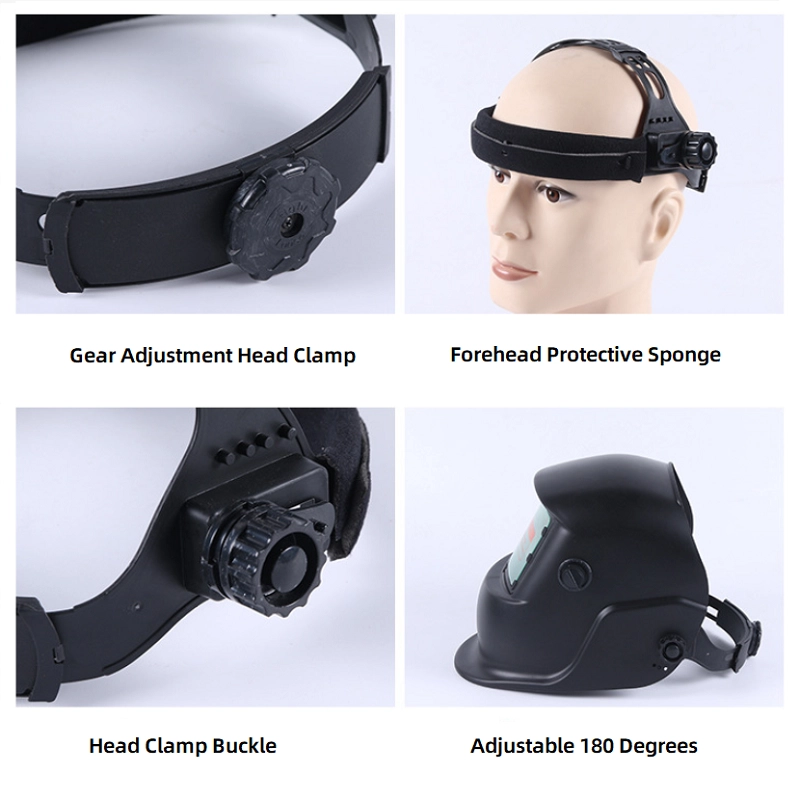
You can have the most advanced lens technology in the world, but if the helmet hurts to wear, it is useless. A heavy helmet puts strain on the neck and shoulders. Over an eight-hour shift, this can lead to serious fatigue and even long-term injury. This is why the headgear—the straps inside the helmet—is so important.
Modern headgear is highly adjustable. It should have multiple straps to distribute the weight evenly across the top of the head, not just clamp onto the forehead. A ratcheting knob at the back allows for easy tightening even while wearing gloves. Good balance is key. If the helmet is front-heavy, it pulls the head down.
When choosing a helmet, consider the weight. Lighter materials like nylon or impact-resistant plastics are preferred. A comfortable welder is a safe welder. If the gear fits well, the welder is less likely to be distracted by discomfort. We design our helmets to feel as light as possible while still providing maximum protection.
Protection in Welding: How Does a Helmet Shield Against Sparks and Radiation?
Protection in welding is a battle on two fronts: physical and invisible. The physical threat comes from spark showers and spatter. The outer shell of the welding helmet is made of tough material designed to deflect these hot particles. It covers the entire face and neck to prevent burns.
The invisible threat is radiation. The welding arc emits UV and IR radiation. This radiation is present even if the lens does not darken. The passive filters in the lens block these rays at all times. This is a critical safety feature. Even if the battery dies in an auto-darkening helmet, your eyes are still safe from UV burns, although the bright light will still be uncomfortable.
To ensure total safety, the helmet must provide coverage from all angles. Some helmets have curved front plates to deflect fumes and smoke as well. The goal is to isolate the welder's sensitive eyes and face from the harsh environment inside the helmet and out. This comprehensive shielding is what makes a welding helmet the most vital piece of personal protective equipment.
What Should You Look for When Choosing a Helmet Lens?
The helmet lens is the heart of the system. When shopping, look beyond just the shade number. Check the switching speed. This is how fast the lens goes from light to dark. Professional helmets switch in 1/25,000 of a second or faster. A slow reaction time can result in a momentary flash that fatigues the eye.
Also, look at the viewing area. A larger viewing area gives the welder better peripheral vision. This helps in orienting oneself in the workspace and seeing the joint clearly. While a huge window isn't always necessary, it is a nice luxury that improves comfort.
Check the number of sensors. A basic helmet has two sensors to detect the arc. A professional one, like those from ESAB or our Automatic Dimming Face Protection Head Mounted Welding Mask, often has four. More sensors mean the lens is less likely to be blocked by an obstruction, like a pipe or the welder's own hand. This ensures the lens stays dark during the entire welding process.
How Do Modern Features Make Welding Easier and Safer?
Technology has changed welding safety for the better. Modern features include grind modes, where the lens locks into a light shade so the user can grind metal without the helmet flickering. This saves time because the welder doesn't have to switch to a face shield.
Digital controls are another great advancement. Instead of tiny knobs, some helmets have digital displays to set the exact shade, sensitivity, and delay. This precision helps when welding outdoors or in varying light conditions. Some helmets even have memory settings to save your favorite parameters for different jobs.
These features make welding less of a chore. They allow the welder to adapt to the environment. The best welding results come when the equipment works with you, not against you. Whether you are using a standard brand or a high-quality import, these modern conveniences are worth looking for.
How to Choose a Welding Helmet: A Checklist for Buyers
If you are ready to choose a welding helmet, use this simple checklist. It sums up everything we have discussed to help you find the right welding gear.
- Safety Standard: Does it meet ANSI Z87.1? This is the first thing to check.
- Lens Type: Do you want fixed shade (cheaper) or auto-darkening (better performance)?
- Optical Clarity: Is the view clear? Look for a 1/1/1/1 or 1/1/1/2 rating.
- Comfort: Is the headgear adjustable? Is the helmet lightweight?
- Shade Range: Can you adjust the shade for different processes like MIG and TIG?
- Sensors: Does it have at least 2 sensors (4 is better)?
- Viewing Area: Is the window big enough for your needs?
- Power: Is it solar-powered with a battery backup?
- Brand/Quality: Are you buying from a reputable source? (While brands like ESAB are great, many factories like ours produce equal quality at better prices).
- Price: Does it fit your budget while still offering the level of protection you need?
By following this guide, you can ensure that every welder in your shop is protected by the best welding helmet for the job. Remember, safety is an investment that pays off every single day.

Key Takeaways
- Always Prioritize ANSI: Ensure your welding helmet meets the ANSI Z87.1 safety standard for impact and radiation protection.
- Go Auto-Darkening: For productivity and ease of use, an auto-darkening lens is superior to a fixed shade.
- Comfort Matters: A lightweight helmet with adjustable headgear keeps the welder focused and reduces fatigue.
- Check the Sensors: More sensors mean reliable darkening, especially when welding out of position.
- Protect Your Eyes: The helmet is the primary source of eye protection against UV rays, infrared, and bright light.
- Get the Right Fit: Use the checklist to match the helmet features to your specific welding applications.