Choosing the Right Insulated Gloves for Winter Welding: A Guide to Heavy-Duty Cold-Weather Work Gloves and Impact Protection
When the temperatures drop, the job site changes completely. Cold air bites at your fingers, making simple tasks feel impossible. Dropping a tool is annoying, but losing your grip on a hot torch or a heavy piece of steel is incredibly dangerous. This comprehensive guide to insulated hand protection explores exactly how to keep your hands safe, warm, and moving freely.
We will break down the science of thermal materials, the importance of maintaining movement in your fingers, and how to spot the best gear on the market. Whether you manage a large construction crew or spend your days fabricating metal in an unheated shop, understanding the anatomy of a cold-weather glove will save you time, money, and potentially serious injuries. Read on to discover how to beat the freeze without sacrificing performance.
Why Are Gloves Essential for Cold-Weather Work Environments?
When you step outside into freezing conditions, your body is smart. It instantly starts pulling warm blood away from your fingers and toes, sending it to your vital organs instead. This natural survival mechanism is great for your heart, but terrible for your hands. Within minutes, your fingers lose their feeling. You lose your grip strength. You start to fumble. This is why gloves are essential for cold-weather work environments. They act as an artificial barrier to convince your body that your hands are still safe, keeping the warm blood flowing all the way to your fingertips.
Without proper gear, cold-weather work becomes hazardous. Numb hands cannot safely operate heavy machinery or strike a precise arc. Furthermore, if you just try to use your standard gloves during the winter, you will quickly notice a problem. Summer gloves do not handle frost well. The materials freeze and turn into stiff gloves, locking your hands in an uncomfortable position. When temperatures drop, you need gloves designed specifically for the climate. To work safely and stay comfortable, you must upgrade. The cold saps your energy. Warm hands help you maintain productivity and keep the job moving forward.

How Do Materials Used in Winter Gloves Actually Work?
Have you ever wondered how a thin piece of fabric keeps you from freezing? It is all about trapped air. The materials used in winter gloves actually work by creating tiny pockets of dead air space. Your body heat warms up this trapped air, and the insulation acts like a wall, stopping the cold outside air from stealing your heat.
A standard glove relies on three main parts to achieve this. First, you have the outer shell, which blocks the wind. Second, you have the inner liner, which holds the warm air against your skin. Third, you need a material that offers high cold resistance without adding too much weight. Different gloves use different setups. Some rely on thick cotton, while others use synthetic fleece or high-tech microfibers.
Let's look at a quick breakdown of common thermal materials:
| Material Type | Warmth Level | Bulkiness | Best Application |
|---|---|---|---|
| Cotton Fleece | Low to Medium | Low | Mild chilly days, basic tasks |
| Foam Lining | Medium | High | Heavy lifting, standard winter days |
| Microfiber (Thinsulate™) | High | Very Low | Tasks requiring high dexterity |
| Wool | High | Medium | Wet environments, deep freezes |
By picking the right inner liner, you can dramatically improve your comfort. Remember, a winter welding project requires gear that can handle sparks on the outside while keeping the inside cozy.
What Are the Key Features of Choosing the Right Insulated Work Gloves?
You cannot just grab any thick mitt off the shelf and expect it to work perfectly. Finding the right insulated work gloves involves checking specific details. The first feature to check is the grams per square meter or GSM. This number measures the density of the insulation. A higher GSM means a thicker, warmer glove. For mild winter days, a 40-gram insulation might be enough. For sub-zero days, you might need 100-gram or even 200-gram insulation.
Next, consider the wind chill. Moving air strips heat away from your skin incredibly fast. Your glove must have a solid windproof outer layer, often made from dense leather or synthetic coatings. Water resistance is another major factor. If water sneaks into your glove, the insulation stops working. Wet hands freeze much faster than dry hands.
These key features are critical when choosing the right insulated safety gear. You want gloves that keep your hands completely shielded from the elements. Manufacturers design these items to act as a fortress. Good safety gloves combine all these elements so you do not have to compromise on safety to stay warm.
Types of Insulated Hand Protection: Which Glove Is Best for Winter Welding?
Welding in the winter is a unique challenge. You are dealing with two extreme temperatures at the same time: freezing cold from the weather, and massive heat from the welding arc. This means winter welding demands dual protection. You need a glove that stops the cold but will not catch fire when hit by a 3000-degree spark.
Different types of insulated gloves cater to different welding processes. For Stick welding and high-amperage MIG welding, you need thick, heavy hand protection. These gloves come with dense foam or fleece linings. They block the brutal heat of the weld and the chill of the steel. They also usually feature extra-long cuffs to protect your forearms from flying spatter.
On the other hand, TIG welding is a delicate process. You have to feed a thin filler wire with your fingers. You cannot do this wearing a giant, bulky mitt. For TIG, the best winter option is a top-grain leather glove lined with a very thin, high-tech thermal layer. You must have the feeling in your fingertips. Determining which glove is best depends entirely on what kind of torch you hold in your hand.
Does Thinsulate™ Provide the Best Welding Dexterity in Cold Conditions?
When we talk about maintaining movement, Thinsulate™ is a game changer. Created by 3M, this synthetic material is famous for a simple reason: it is incredibly thin but astonishingly warm. The secret lies in its microfibers. These fibers are about 15 micrometers in diameter, which is much thinner than traditional polyester fibers. Because the fibers are so small, they can pack tightly together, trapping more dead air in less space.
This is why Thinsulate™ offers the best welding dexterity on the market. When you are trying to manipulate a TIG torch or change out a tiny contact tip on your MIG gun, you cannot wear a glove that feels like a boxing glove. Cold conditions naturally stiffen your joints, so your gear shouldn't make it worse.
If a glove uses this advanced liner, it will keep hands warm without turning your fingers into useless sausages. High-end gloves use this material precisely because it offers the ultimate balance. You get the thermal protection you desperately need, and you keep the fine motor skills required to lay down a perfect, beautiful weld bead.
How Does Impact Protection Enhance Choosing the Right Glove for Winter?
Winter brings snow, ice, and slippery surfaces. Things get dropped. Hands smash against cold, unforgiving steel. This is where impact protection steps in to save the day. When you are choosing the right gear, you should strongly consider gloves that armor the back of the hand.
Many modern safety gloves feature Thermoplastic Rubber (TPR) pads glued or stitched across the knuckles and the back of the fingers. TPR acts like a shock absorber. If a heavy wrench slips and whacks your hand, the TPR spreads the force of the blow out, preventing broken bones and severe bruises.
When searching for gloves for winter, finding a pair with TPR is a huge upgrade. Cold skin and cold bones hurt much more when struck. The cold already reduces your pain tolerance. These reinforced gloves offer peace of mind. Some Grade AB Cowhide Elastic Cuff Opisthenar Pure Cotton Welding Gloves integrate heavy padding to ensure the back of your hand survives a rough day on the frozen job site. The best gloves feature reinforced zones exactly where accidents happen the most.
What Are the Benefits of Choosing Heavy-Duty Welding Gloves for Extreme Temperatures?
You get what you pay for. Buying cheap gloves for a harsh winter is a quick way to waste money. The benefits of choosing true, heavy-duty welding gloves become obvious after just one week on the job.
First, consider durability. Extreme temperatures cause cheap plastics and fake leathers to crack and shatter. High-quality leathers, however, remain tough. Heavy-duty gloves resist abrasion. When you are dragging your hands across rusty pipes, sharp metal edges, and rough concrete all day, thin gloves will rip open. Once a glove rips, the cold air rushes in, and the glove is ruined.
Second, consider the thermal protection. Good gloves use Kevlar stitching. Standard cotton thread burns up when a stray spark hits it. Kevlar thread does not. This means your glove won't fall apart at the seams. Welders need this kind of extreme reliability. By spending a little more upfront on heavy-duty work gloves, you actually save money over the season because you do not have to replace them every Friday.
Selecting the Right Glove: How to Balance Warmth and Good Grip?
A warm glove is useless if you cannot hold onto your tools. Selecting the right glove requires a strict balance between thick warmth and a solid, good grip. If the insulation is too loose inside the shell, your hand will slide around inside the glove when you try to turn a wrench.
To fix this, many manufacturers use a "pre-curved" design. If you look at your hand when it is relaxed, your fingers naturally curve inward. A pre-curved glove is sewn to match this natural resting shape. Because the glove naturally curves, you do not have to fight the thick leather and insulation just to close your fist. It stays flexible.
You must choose gloves that feel like a natural extension of your body. When the inner liner is fully bonded to the outer leather shell, the layers will not separate. This gives you a firm, non-slip hold on your hammer, your grinder, or your welding gun, helping you maintain productivity safely.
Tips for Using Insulated Leather Construction During Long Shifts
Wearing thick gloves for 10 or 12 hours straight brings its own set of problems. Even in freezing weather, hard work makes your hands sweat. If you are using insulated gloves with a solid leather construction, that sweat can get trapped inside. Once you stop moving, that cold sweat will freeze your fingers from the inside out.
To survive long shifts, you have to manage moisture. First, try to keep hands dry by taking the gloves off during breaks and letting them air out near a heater. Second, consider buying two pairs of the right insulated gloves. Wear one pair in the morning, and swap to the fresh, dry pair after lunch.
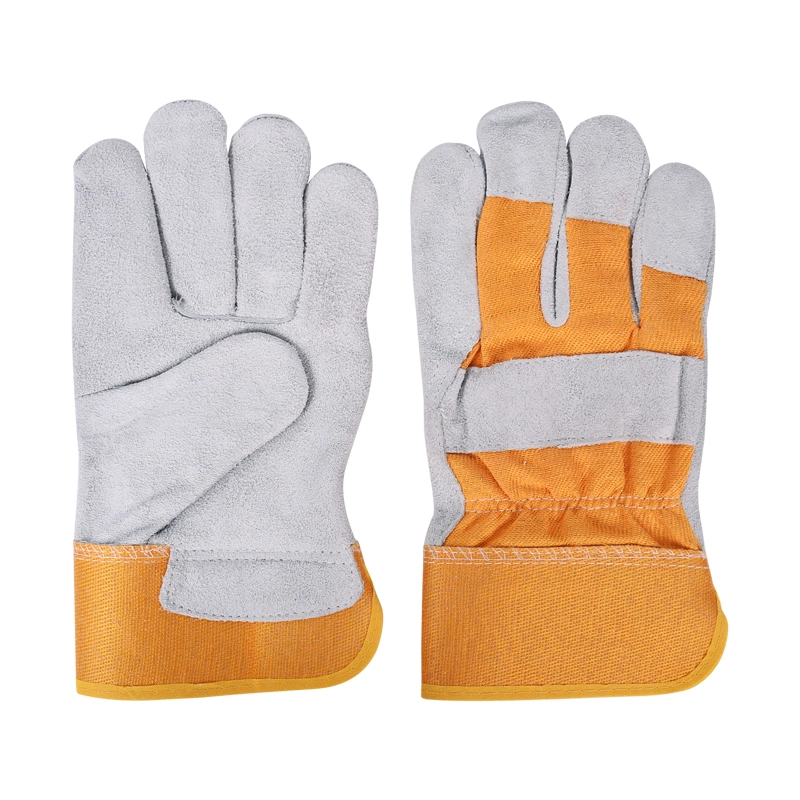
Leather also needs care. Winter brings salt, slush, and mud. These chemicals dry out leather, causing it to shrink and crack. You can extend the life of your Plush Palms Short Universal 26.5cm Cowhide Leather Gloves by wiping the dirt off at the end of the day. A clean glove is a warm glove. Taking care of your gear ensures your gear takes care of you.
Are Cowhide Work Gloves the Ultimate Resistant Gloves for Winter Long Jobs?
When it comes to outfitting a crew for a harsh, winter long project, cowhide stands above the rest. It is nature's original heavy-duty armor. Cowhide is incredibly dense, which makes it fantastic at blocking bitter winter winds. It also offers superior puncture and abrasion resistance compared to synthetic materials.
If a job requires gloves that can take a severe beating, cowhide work gloves are the ultimate answer. They are naturally thick, providing excellent baseline insulation even before a fleece or thermal liner is added. For rigorous industrial tasks, high-quality insulated cowhide gloves provide the best overall defense.
Cowhide is also the standard for welding. Because it does not melt like nylon or polyester, it safely deflects hot sparks and slag. A rugged pair of14 inch Dark Green Leather Welder Protective Gloves will guard you against heat and cold simultaneously. For general yard work or driving heavy equipment, cowhide leather short working gloves offer great wrist mobility. Gloves are built from this tough hide because it has been proven to work for decades. It ensures that no matter how low the thermometer dips, you can do your job efficiently and work safely.
Summary: Key Things to Remember for Winter Hand Protection
- Standard Gloves Fail in the Cold: Summer gloves stiffen and freeze, drastically reducing your grip and safety.
- Understand Insulation: Materials like Thinsulate™ trap dead air to keep the heat in without adding unnecessary bulk.
- Check the GSM: A higher Grams per Square Meter rating means a warmer, thicker glove for extreme conditions.
- Welding Requires Dual Protection: You need gear that stops the freezing weather but also withstands 3000-degree sparks.
- Dexterity is Vital: If you cannot feel your TIG torch or your hand tools, your work quality will suffer. Choose pre-curved designs to fight hand fatigue.
- Guard Against Impacts: Look for TPR rubber padding on the back of the hand to prevent crushing injuries on slippery, icy job sites.
- Manage Your Sweat: Wet hands freeze fast. Buy two pairs for long shifts and swap them out at midday to keep the interior dry.
- Rely on Cowhide: For extreme abrasion, wind blocking, and fire resistance, cowhide leather remains the undisputed king of winter workwear.